Ink Through Time: A Short History of Tattooing
From a 5,300-year-old iceman to the Japanese and black & grey work Kel tattoos today: a quick walk through where tattooing comes from.
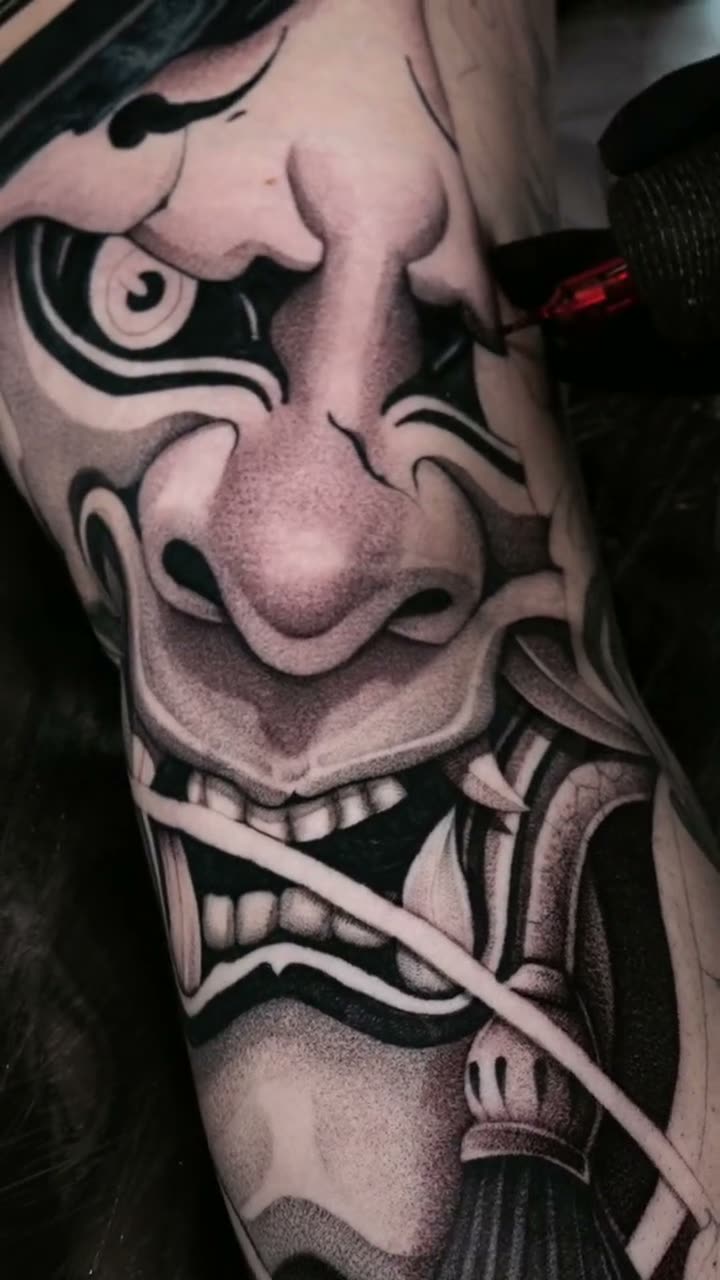
People have been marking their skin for more than five thousand years. Long before machines, studios or conventions, tattoos were medicine, protection, rank, devotion and memory, carried on the one canvas nobody could take away. The styles Kel works in today, black & grey, Japanese-inspired pieces, anime and florals, all sit at the end of that long line.
Where it all begins
The oldest tattooed human we know of is Ötzi, the “Iceman” found in the Alps between Austria and Italy in 1991. He lived around 3300 BCE and carries 61 tattoos: simple lines and crosses made by rubbing charcoal into small cuts. Most of them sit over joints and the lower back, which is why many researchers believe they were a kind of therapy rather than decoration.
Around the same time in Egypt, two mummies from Gebelein show the oldest known figurative tattoos: a wild bull, a Barbary sheep and S-shaped motifs. Later, priestesses like Amunet (around 2000 BCE) wore patterns of dots and dashes. And in the frozen tombs of the Altai mountains, the Pazyryk “Ice Maiden” (5th century BCE) was buried with a mythical deer tattooed on her shoulder, animal art full of movement and already very close to what we call a sleeve today.
Where the word comes from
The word itself is Polynesian. In Samoa and Tahiti the practice is called tatau, from a root that means to strike, the tapping of the tools on the skin. When Captain James Cook reached Tahiti in 1769, he wrote it down in his journal as “tattow”, and sailors carried both the word and the custom back to Europe. Samoan pe’a and Māori tā moko are still living traditions today.
Japan and the art of the full body
In Japan, tattooing became a true art form during the Edo period (1603–1868). Woodblock prints, above all Utagawa Kuniyoshi’s heroes of the Suikoden (1827), turned heavily tattooed warriors into pop icons, and artisans began translating them onto skin: dragons, koi, tigers, peonies, waves and hannya masks wrapping the whole body. The government banned tattooing in 1872, as Japan opened to the West, and the ban was only lifted in 1948. The visual language of irezumi never went away.

That language is at the core of Kel’s Japanese-inspired work: big, readable shapes, a flow that follows the body, and backgrounds of wind, clouds and water that tie a sleeve together.
The machine and the street
In 1891, New York tattooer Samuel O’Reilly patented the first electric tattoo machine, adapted from an electric pen designed by Thomas Edison. Tattooing became faster and cheaper, and it spread through ports, circuses and the military. American traditional grew out of that world: bold lines, a few colors and images made to last, refined in the mid-20th century by artists like Norman “Sailor Jerry” Collins in Honolulu.
Black & grey: a Los Angeles story
Black & grey as we know it grew out of Chicano culture in East Los Angeles in the 1970s. Working with a single needle and only black ink, often on homemade machines, artists created soft gradients, fine lettering and portrait-like realism. Shops like Good Time Charlie’s Tattooland, with artists such as Jack Rudy and Freddy Negrete, carried the style from the street into professional studios, and from there to the whole world.

It is also the foundation of Kel’s work. Strong contrast, smooth shading and a clear silhouette are what keep a black & grey tattoo readable years after it heals.
Today: anime, florals and the convention floor
Modern tattooing mixes everything. Anime and manga, Japan’s newest visual export, carry the same love for bold outlines and expressive faces that the old woodblock prints had. Florals borrow from botanical illustration and from the peonies and chrysanthemums of irezumi. And conventions turned tattooing into a competitive craft, where judges look at line work, shading, composition and how a piece fits the body.
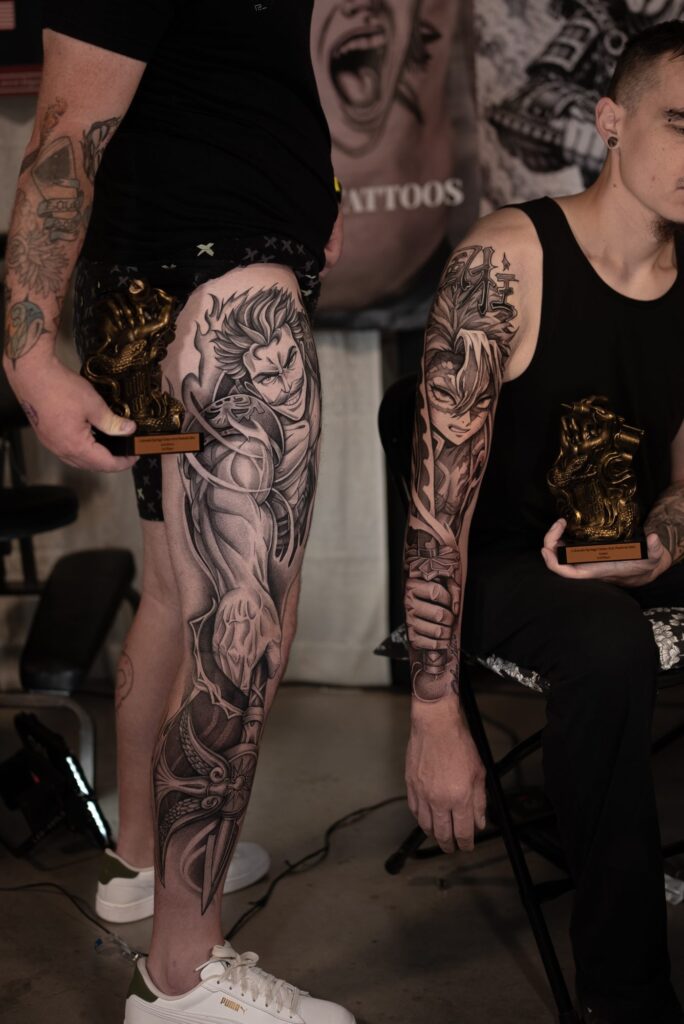
Kel competes in and judges these events, and his anime and chest pieces have taken first places in Denver. Different styles, same rules: respect the body, respect the history, and make something that will still look good in twenty years.
Tattoo history at a glance
- c. 3300 BCEÖtzi the Iceman carries 61 tattoos in the Alps, the oldest known on a human body.
- c. 3300–3000 BCEThe Gebelein mummies in Egypt show the oldest figurative tattoos.
- 5th century BCEThe Pazyryk “Ice Maiden” is buried in the Altai mountains with animal tattoos.
- 1603–1868Edo-period Japan develops irezumi, the full-body tattoo.
- 1769Captain Cook’s voyage brings the Polynesian word tatau into English.
- 1827Kuniyoshi’s Suikoden prints make tattooed heroes a sensation in Japan.
- 1872 – 1948Japan bans tattooing, until the law is lifted after the war.
- 1891Samuel O’Reilly patents the electric tattoo machine in New York.
- 1970sSingle-needle black & grey takes shape in East Los Angeles.
- TodayJapanese, black & grey, anime and floral work share the convention floor.
Got a piece in mind that belongs to this story? Send Kel a booking request and let’s talk about it.